About us & about our batiks
The Arts Patio - a family story
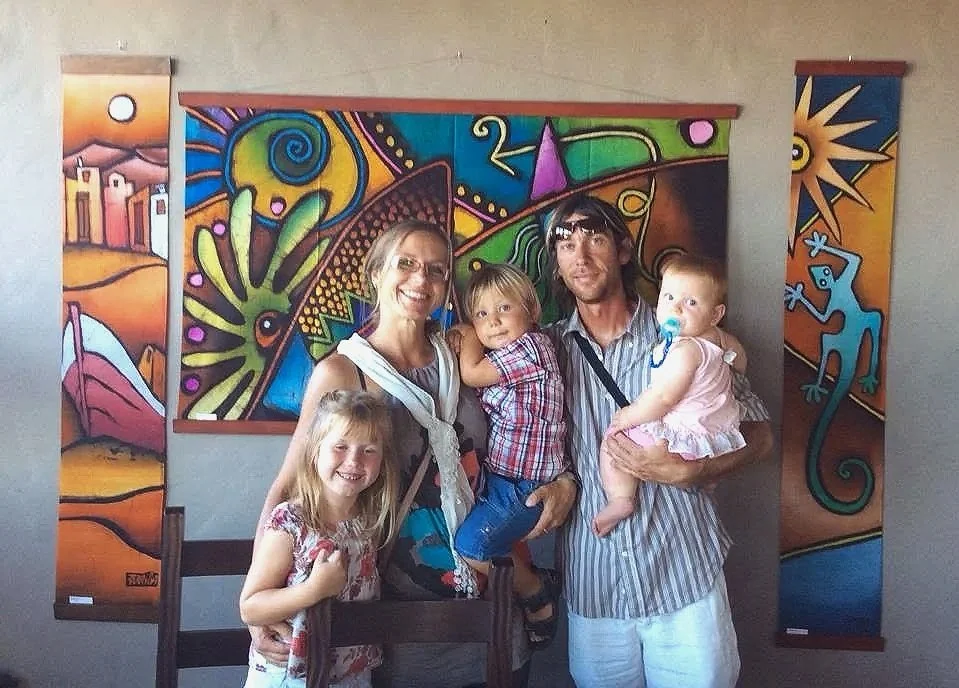
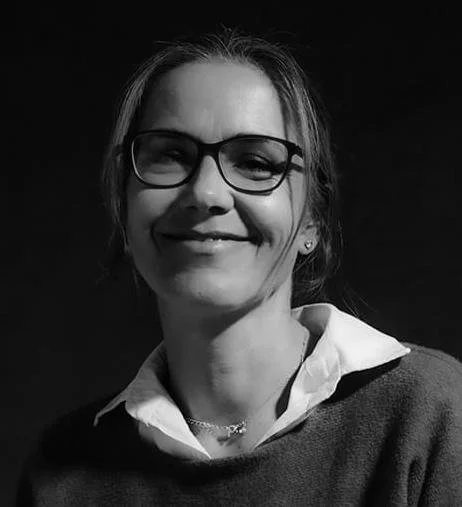
Who stands behind Arts Patio? We are Monika and Kurt (and our children Olivia, Robyn and Daniel). We both have other work, projects and interests, Kurt is a keen photographer with a deep passion for permaculture and eco-gardening. Monika works in the area of Gerontology and currently studies Master in Neuropsychological rehabilitation of cognitive functions in older age.
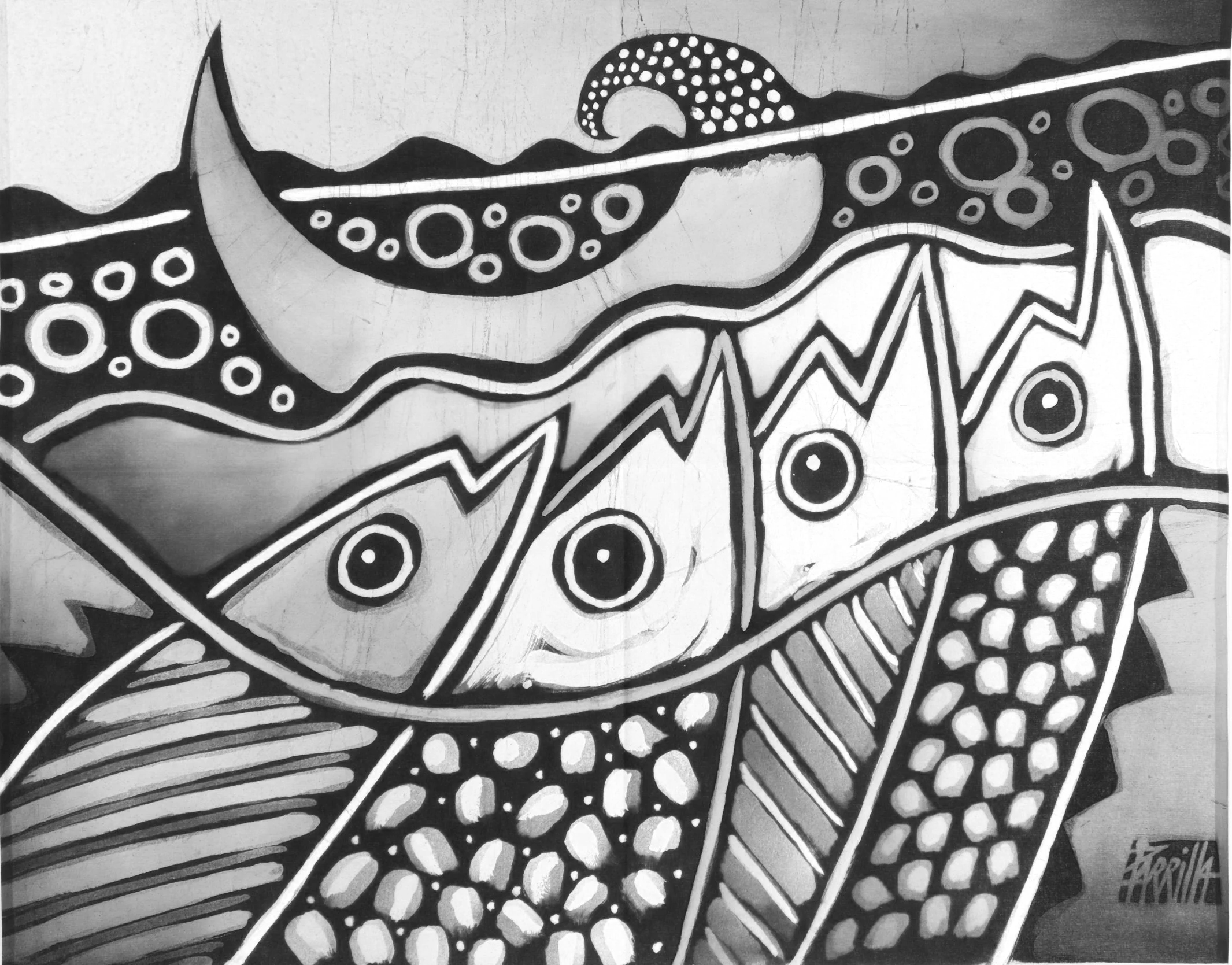
We first encountered the world of batik art in 2014. And it wasn’t the familiar kind of tie-dye, t-shirts tied with elastic bands and dipped into dye. This was something completely different: the art of colour, life and vibrant design mastered by Andrés Parrilla.
And we were instantly captivated.
We created Designart and began sharing these stunning works through pop-up exhibitions and cultural events. The response was incredible, bringing together a wonderful community of art lovers and collectors.
A few years later, our journey had to take a temporary pause. But our love for the art never left us.
Now, more than a decade later, we are back — renewed, inspired and rooted in Portugal as Arts Patio. A fresh name, but the same passion for these extraordinary colours.
We love the way a “simple” batik artwork can transform an entire room. It doesn’t simply fill an empty wall — it can bring colour, energy and life into a space.
Our batiks may not be for every person or every interior. And that’s perfectly fine. But when the right artwork finds the right space, the difference can be remarkable.
You can discover many of our batiks in selected galleries, specialist shops and cafés. We also take part in art and cultural fairs, as well as selected local markets, where we love meeting people and sharing the stories behind the work.
How are our batiks made?
To create a batik, selected areas of the cotton cloth are blocked out by applying a hot wax over them. The cloth is then dyed with natural tints. It is common to use a mixture of beeswax and paraffin wax, one is responsible for the characteristic cracking (paraffin) and the other for a smooth penetration of the wax into the cloth. The parts covered in wax resist the dye and remain the original colour.
This process of dying and waxing can be repeated to create many elaborated and colourful designs.
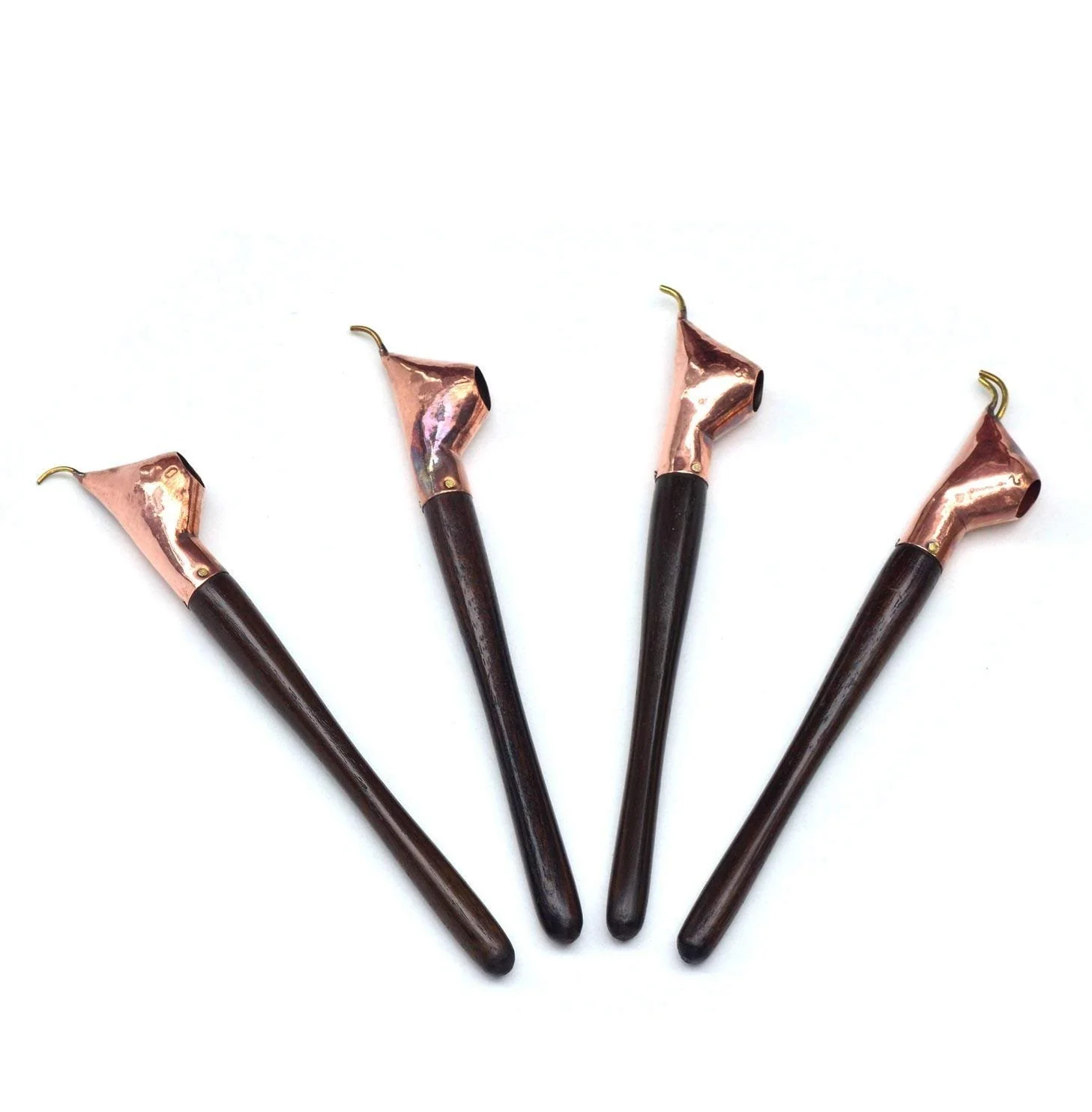
The thin lines are made with a tool called tjanting or with a brush. Tjanting is a wooden handled tool with a tiny metal cup with a little spout, out of which the wax seeps.
After the last dying, the fabric is hung up to dry. Than it is ironed between paper towels or newspapers to absorb the wax and reveal the deep rich colours and the fine lines that give batik its character.
There are other ways of creating batiks, depending on how you want your final result to look. But this one is the technique we use and you can see the results here in our gallery.